
UpServe Starts with the Work
The work we want to hand over to AI is usually quite specific. We want to turn this week’s information into a report, or bring material scattered across several files into one table. Sometimes we simply want a recurring task to need a little less attention next week.
When we first built UpServe, we centered the experience on hiring AI employees, defining their roles, and teaching them through conversation. Being able to put together a setup that suited your own work mattered to us.
Now we want the service to take on more of that preparation. When customers describe the work they want to hand over, we believe UpServe’s role includes providing the tools and working environment needed to get started.
That is why we are making the work itself UpServe’s starting point.
The flow we are building is simple. Describe what needs doing, provide the necessary materials, and review the first result. Then hand over the same kind of work again. You can also start by browsing work that is already set up, but the central idea is to tell us directly what you want to do.
We also want to reduce how much you need to define at the outset. We ask first for what is needed to begin, then refine the criteria together as you see the results. Comments such as “Please include this item next time too” or “In this situation, check with me before proceeding” make the work more clearly defined.
This change extends to the interface.
Think of a weekly progress report. You discuss what has changed this week with your assigned AI while reviewing an organized table and report alongside the conversation. You correct a missing item yourself, or point to something and ask for more detail. You should also be able to find work in progress, items that need your attention, and completed results.
Conversation is useful for explaining context and intent. Tables, documents, and calendars make information easier to scan and work with directly. We are changing the interface so that both views refer to the same materials and the same work. The aim is to reduce the effort of reading an AI response and then copying it into another screen.
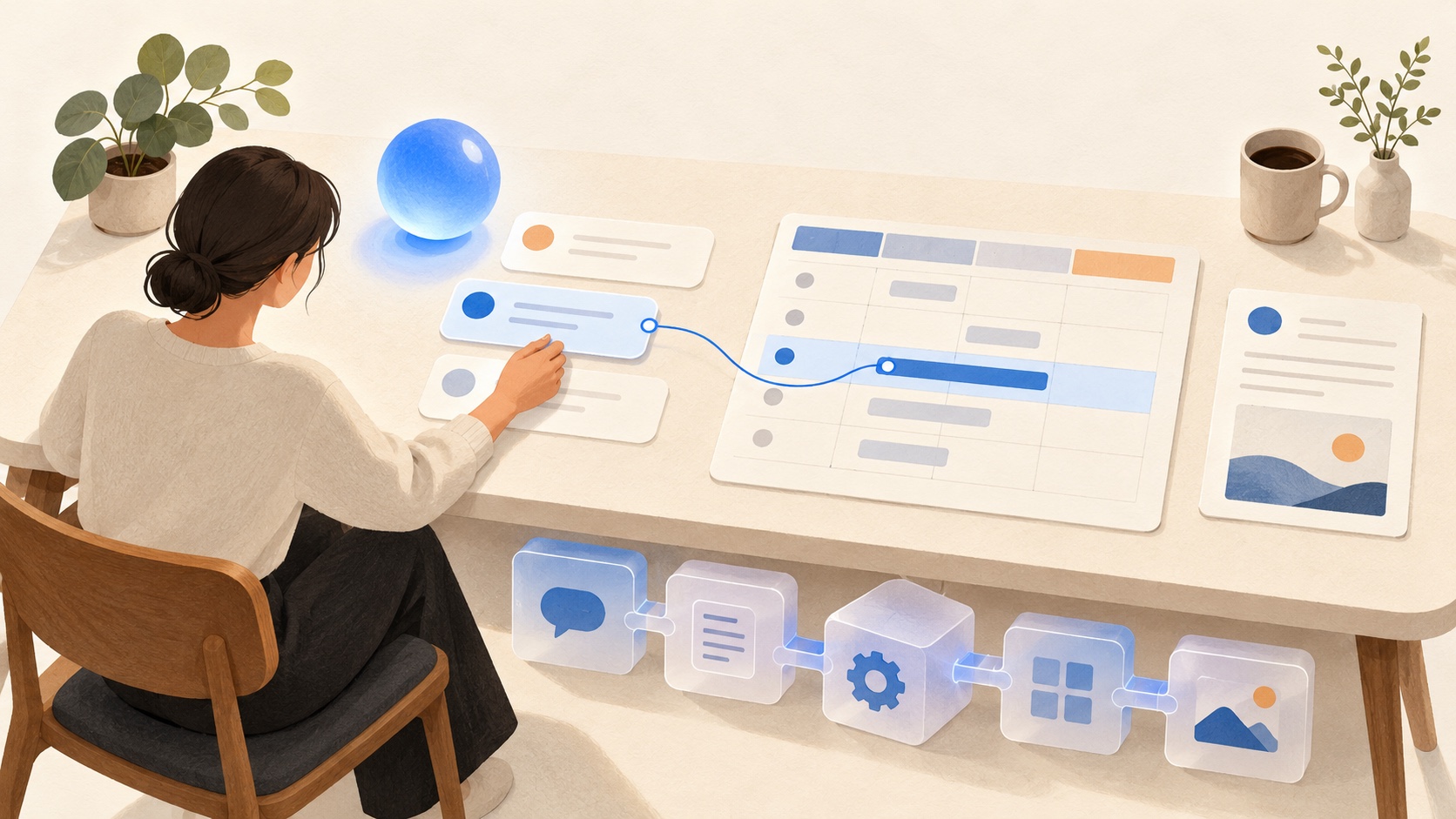
Behind that interface, we are also changing how the AI works.
Recurring work has its own practical knowledge: which materials to examine first, which calculations to check, and what missing information should prompt a question. Those requirements need to shape the actual execution if the work is to be dependable next time.
We are building a foundation that brings together the tools, procedures, reference information, and checks an AI needs for a particular job. Internally, we call this a “harness.” For customers, it is the way their assigned AI carries out their work.
What matters here is the record of work actually done.
We cannot define every working method perfectly in advance. We need to start with a setup that can do the work, then make the criteria more specific by examining results customers accept and corrections they make. When a result is wrong, we need to understand what was missed and where. We also need to test whether a changed approach is better.
Continued use alone does not guarantee improvement. We are building the process for checking what changed and whether it helped the actual work. Our goal is to reduce repeated explanations and repeated corrections over time.
Receive the first result, adjust a few criteria, then hand over the same work with the next set of materials. Keep the conversation, the materials, and the agreed criteria connected along the way. That is the experience we want this redesign to create.
The transition to the new interface has begun, and we are continuing to refine how each type of work runs and how it feels to use it repeatedly. The questions we are asking are close to the customer’s work: How much effort does it take to reach the first result? Is the result easy to understand and correct? Can the customer hand over the same work again?
Customers know what matters in their work. UpServe aims to take more responsibility for the preparation that turns those criteria into the way the work is actually done.
What is one task you would like to hand over successfully once, then hand over again next week?